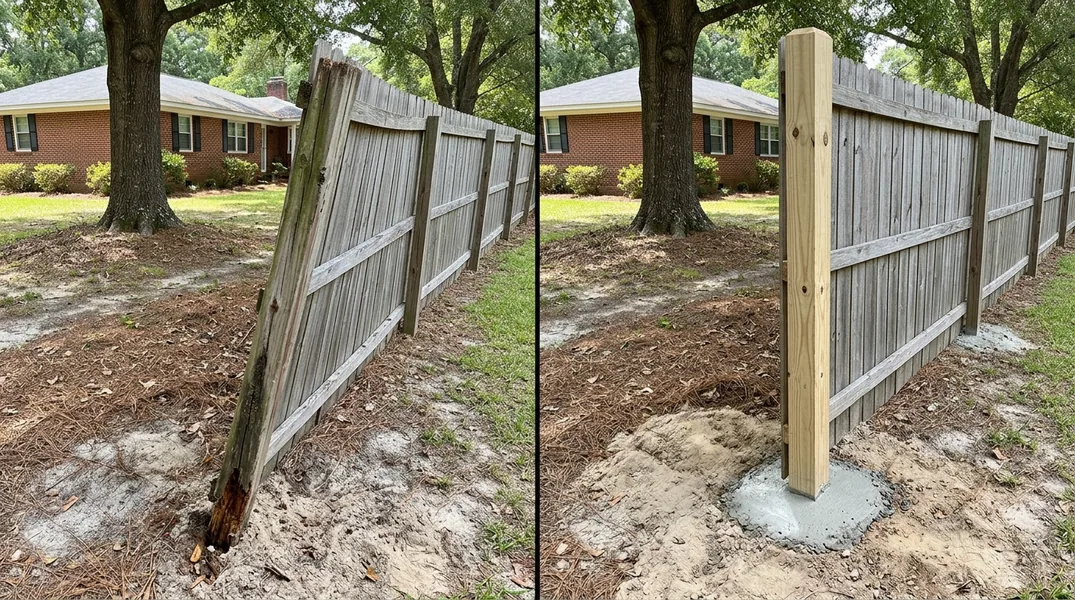
Why Do Fences Lean in Columbia? Understanding Sandy Soil and Settling
If you've noticed your fence starting to tilt or lean, you're not alone. Many homeowners in Columbia experience this frustrating problem, and the culprit is often right beneath the surface. The sandy soil that characterizes much of the Midlands region creates a perfect storm for fence instability. Unlike clay or loam, sandy soil doesn't compact well and offers minimal resistance to settling and shifting, especially when exposed to water, temperature changes, and the weight of a fence structure.
When fence posts are first installed, they're set in concrete that hardens around them. However, sandy soil beneath and around that concrete gradually settles and shifts over time. Heavy rains wash away soil particles, while dry periods cause the remaining soil to shrink. Freeze-thaw cycles in winter accelerate this process by expanding and contracting the soil. The combination of these natural forces means your fence posts lose their stable foundation, causing them to tilt. This is particularly common with Wood & Privacy Fence Installation projects, where the weight of wooden panels puts additional stress on compromised posts.
Signs Your Fence Needs Post Repair or Replacement
The early warning signs of a leaning fence problem are often subtle, but catching them early can save you money and prevent more serious structural damage. Start by walking the perimeter of your fence and looking for posts that aren't perfectly vertical. You can use a level tool held against the post to check for accuracy, or simply stand back and observe the line of your fence from different angles. A leaning fence post might appear to angle away from the property or toward it, and this tilt typically worsens over time if left unaddressed.
Beyond visual inspection, pay attention to how your fence feels and sounds. If panels are pulling away from posts, or if you notice gaps opening up between boards, that's a sign of movement. Some homeowners hear creaking or popping sounds when the wind blows, which indicates the posts are flexing rather than remaining rigid. The concrete footing around the base of the post may also show signs of cracking or heaving. These symptoms suggest that fence post repair or replacement is needed sooner rather than later. Ignoring these signs can lead to complete fence failure, where sections collapse or become unsafe, particularly if you have children or pets using the yard.
Fence Post Repair vs. Replacement: Which Solution Is Right for You
When you discover a leaning fence, your first question is likely whether the post can be repaired or if it needs to be replaced entirely. The answer depends on several factors, including the extent of the lean, the age of the post, and the material. A post that's only slightly out of plumb (tilted just a few degrees) and otherwise structurally sound might be correctable through reinforcement techniques. These can include adding support braces, installing sister posts alongside the original, or re-setting the concrete footing. However, these repairs are often temporary solutions that buy you time rather than providing a permanent fix.
Fence post replacement is the more reliable long-term solution, especially in Columbia's sandy soil conditions. When a post is replaced, the old post is removed and a new one is installed with proper techniques designed to handle our local soil challenges. This might include digging deeper than the original installation, using larger diameter concrete footings, or incorporating gravel and drainage solutions to prevent future settling. A professional contractor will assess the condition of your existing posts and recommend the best approach for your specific situation.
How Sandy Soil Affects Different Fence Types
While leaning fence posts are a common problem across all fence types in Columbia, different materials respond differently to soil shifting. Wood & Privacy Fence Installation is particularly vulnerable because wooden posts can rot when exposed to moisture during the settling process, and the weight of wooden panels accelerates post movement. Vinyl & PVC Fence Installation offers better resistance to moisture but can still suffer from post lean if the underlying foundation isn't stable. Vinyl posts are lighter than wood, which can actually be an advantage in sandy soil since there's less weight stressing the foundation.
Chain Link Fence Installation and Aluminum & Ornamental Iron Fencing present their own challenges with sandy soil. Chain link fences, while lightweight, rely on perfectly vertical posts to maintain proper tension on the fabric. If posts lean, the entire fence becomes loose and ineffective. Metal posts in aluminum and ornamental iron fencing are less prone to material degradation but equally vulnerable to foundation shifting. The key across all fence types is ensuring that the initial installation accounts for local soil conditions and includes proper drainage and foundation depth to minimize future movement.
Professional Leaning Fence Repair Near Me: When to Call a Contractor
While some homeowners might be tempted to tackle fence repairs themselves, leaning fence posts often require professional expertise, especially when it comes to determining the root cause and implementing a lasting solution. A qualified fence contractor can perform a thorough assessment of your posts, soil conditions, and the structural integrity of your entire fence system. They'll have the proper tools to measure the degree of lean, examine the concrete footings, and evaluate soil stability. They can also identify whether the problem is isolated to one or two posts or if it's a widespread issue affecting multiple sections of your fence.
Columbia Fence Company serves homeowners throughout the Columbia area who are dealing with leaning fence problems. With experience installing and repairing fences in our region's sandy soil conditions, we understand the unique challenges that local properties face. If you've noticed your fence leaning or showing signs of instability, we recommend getting a professional evaluation. You can reach us at (839) 250-4891 to discuss your fence concerns and schedule a free estimate. Our team will provide honest recommendations about whether your posts can be repaired or should be replaced, and we'll explain the pricing involved so there are no surprises.
Preventing Future Fence Leaning: Installation Best Practices
The best solution to leaning fence posts is preventing them from happening in the first place. When you're planning a new fence installation or replacing an old one, working with experienced contractors who understand Columbia's soil conditions makes all the difference. Proper installation should include digging post holes to an appropriate depth (typically 30 to 36 inches for residential fences), using quality concrete that extends well below the soil surface, and incorporating drainage considerations. Some contractors in sandy soil regions use larger diameter concrete footings or add gravel bases to improve drainage and reduce settling.
If you're considering a new fence project or need to replace an existing one due to leaning posts, make sure your contractor is familiar with local soil challenges. When you contact Columbia Fence Company for your project, we'll ensure that proper installation techniques are used to minimize the risk of future problems. Whether you're interested in Wood & Privacy Fence Installation, vinyl, chain link, or metal fencing, we design our installations to withstand Columbia's unique environmental conditions. Call us at (839) 250-4891 or visit our website to learn more about how we approach fence installation with long-term stability in mind.
Looking for a professional tree service in Columbia? Columbia Fence Company responds fast for all your fence needs.
Get a Free Quote