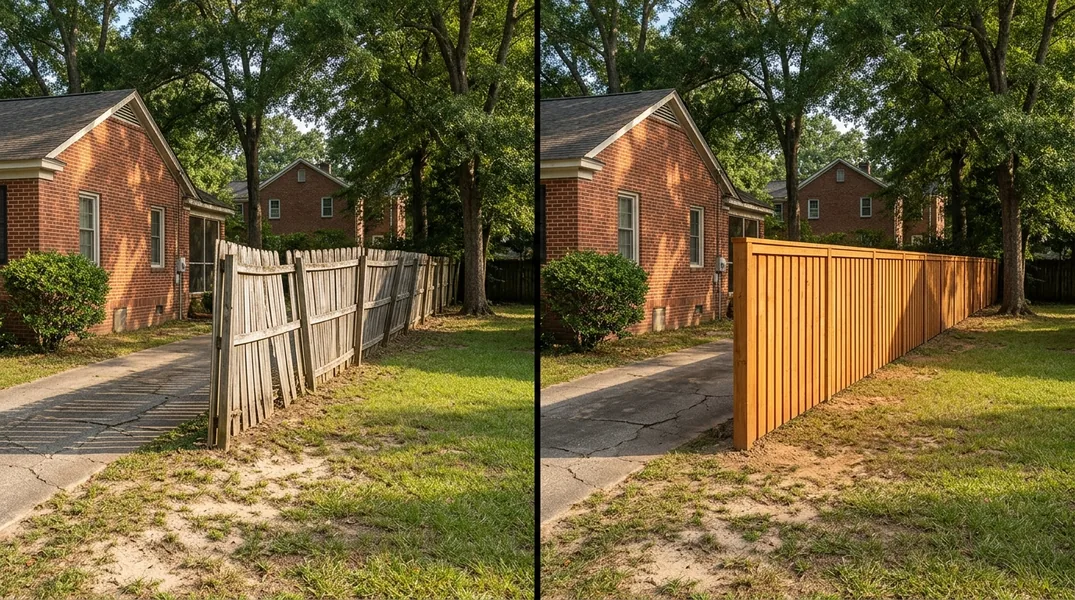
Why Columbia's Summer Climate Grays Wood Fences So Quickly
If you've invested in a beautiful Wood & Privacy Fence Installation in Columbia, you may have noticed something troubling: within just one or two summers, your once-rich wood tones fade to a dull gray. This isn't a sign of poor craftsmanship or defective materials. Instead, it's a direct result of Columbia's unique climate and the natural chemistry of exposed wood.
The culprit is a combination of intense ultraviolet (UV) radiation and high humidity. South Carolina summers are notoriously hot and muggy, and Columbia sits squarely in the heart of that zone. The sun's UV rays penetrate the wood's surface and break down lignin, the compound that gives wood its color and structural integrity. Simultaneously, the region's moisture-laden air promotes the growth of mold, mildew, and algae on the fence's surface. These microorganisms feed on the wood fibers and create that characteristic gray patina. Unlike decay, this graying is primarily cosmetic in the early stages, but it signals that your fence is beginning to deteriorate beneath the surface.
Understanding the Science Behind Wood Fence Discoloration
Wood naturally contains water, and when exposed to the elements without protection, it absorbs and releases moisture in response to humidity and rainfall. This constant expansion and contraction weakens the wood's cellular structure over time. When UV rays simultaneously attack the surface, the wood becomes increasingly vulnerable to splintering, warping, and splitting. The gray color you see is essentially the wood's outer layer being oxidized and colonized by airborne spores.
The speed of this process depends on several factors: the type of wood used in your fence, the direction it faces (south and west-facing sides gray faster due to more sun exposure), and how much shade your yard receives. Cedar and redwood, popular choices for privacy fences, are naturally more resistant to decay than pressure-treated pine, but they still succumb to graying relatively quickly in Columbia's climate. Without protection, even premium wood species will show significant graying within 12 to 24 months of installation.
The Importance of Fence Staining and Sealing Early
The good news is that graying is entirely preventable with proper maintenance. The two most effective defenses are fence staining and sealing a wood fence. These aren't cosmetic upgrades; they're essential protective measures that extend your fence's lifespan by years or even decades. A quality wood stain contains pigments that block UV rays from reaching the wood's surface, while sealers create a moisture barrier that prevents water absorption.
The timing of your first application is critical. Ideally, you should stain or seal your fence within the first few months after installation, before the wood has been heavily exposed to the elements. If your fence is already showing signs of graying, don't worry. The wood can still be restored. A professional cleaning to remove mold and mildew, followed by sanding if necessary, will prepare the surface for stain or sealer application. Many homeowners are surprised to learn that restoring a gray fence to its original beauty is often simpler and more affordable than they expect.
Fence Staining vs. Sealing: Which Is Right for Your Columbia Home
While the terms are sometimes used interchangeably, fence staining and sealing serve slightly different purposes. A wood stain is a pigmented product that penetrates the wood and provides both color and UV protection. Stains come in a range of tones, from natural cedar and redwood shades to darker browns and grays, allowing you to customize your fence's appearance while protecting it. Stains typically last 2 to 3 years in Columbia's climate before requiring reapplication.
A wood sealer, by contrast, is often clear or lightly tinted and focuses primarily on moisture protection. Sealers create a protective film on the wood's surface and are excellent for preventing water damage and rot. However, they offer less UV protection than stains, so your fence may still gray over time, though the process will be significantly slowed. Many fence owners in the area choose to combine both: applying a sealer first for moisture protection, then topping it with a stain for color and additional UV defense. This two-step approach provides the most comprehensive protection available. The choice between staining and sealing depends on your priorities, budget, and aesthetic preferences, but both are far superior to leaving your wood fence unprotected.
Professional Fence Staining and Sealing Near Me: When to Call a Pro
While some homeowners attempt fence staining and sealing as DIY projects, the results are often disappointing. Professional application requires proper surface preparation, which is the most labor-intensive and crucial step. The fence must be thoroughly cleaned to remove dirt, algae, and mildew. If the wood is already gray or weathered, it may need to be lightly sanded or power-washed. Improper preparation leads to poor stain or sealer adhesion, resulting in peeling and premature failure.
Professional contractors have access to commercial-grade stains and sealers that are more durable and UV-resistant than retail products. They also possess the expertise to choose the right product for your specific wood type and Columbia's climate. Columbia Fence Company specializes in fence staining and sealing for local homeowners, and our team understands the unique challenges posed by South Carolina summers. We handle every step from initial assessment and cleaning through final application, ensuring your fence receives professional-grade protection. If you're noticing graying on your fence or want to protect a newly installed one, reach out to us at (839) 250-4891 for a free estimate.
Maintenance Schedule and Long-Term Fence Care
Once you've invested in fence staining or sealing, establishing a maintenance routine will maximize your investment. Most stains and sealers require reapplication every 2 to 4 years, depending on the product quality and weather exposure. In Columbia, where summers are particularly harsh, you may find yourself resealing or restaining on the shorter end of that timeline. Regular inspection in spring and fall will help you catch early signs of wear, such as water beading or stain fading, before problems develop.
Between professional applications, simple maintenance goes a long way. Rinse your fence with a garden hose annually to remove dust and debris. Trim back any vegetation that touches the fence, as plants retain moisture and promote mold growth. If you notice any cracks, splinters, or soft spots developing, address them promptly to prevent water infiltration and rot. By staying proactive with maintenance and scheduling professional staining or sealing every few years, your wood fence will maintain its beauty and structural integrity for 15 to 20 years or more. The small investment in regular care today will save you thousands in premature fence replacement down the road.
Looking for a professional tree service in Columbia? Columbia Fence Company responds fast for all your fence needs.
Get a Free Quote